98Choreografien
6Filme
25Videosequenzen
1Archivbilder
Biografie
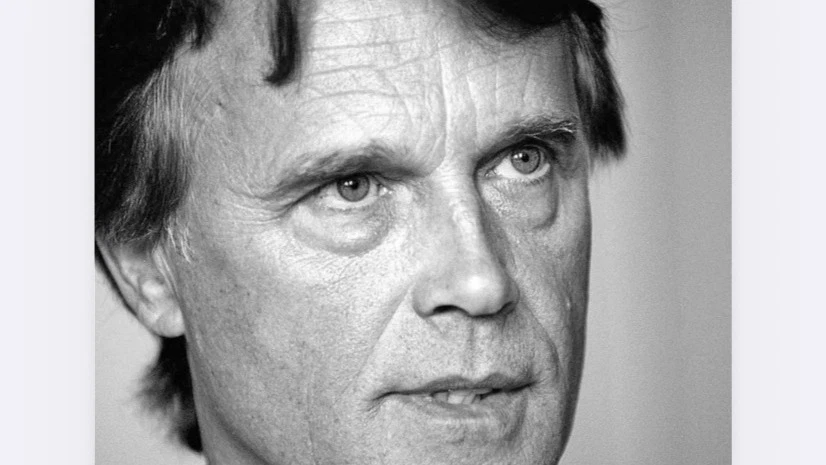
Forsythe studierte Theaterwissenschaft, Bildende Kunst und Mathematik und begann eine Tanzausbildung in Florida bei Nolan Dingman und Christa Long, bevor er Schüler an der „Joffrey Ballet School“ in Chacago Illinois wurde. Ab 1971 tanzte er beim „Joffrey Ballet“. 1973 trat er „Stuttgarter Ballett“ bei, wo er von 1976 bis 1983 Hauschoreograf war. Schon in dieser Zeit wurden seine Ballette in europäischen Hauptstädten, aber auch, in New York und San Franzisco gezeigt oder für die dortigen Companien geschaffen. 1984 bis 2004 war er künstlerischer Direktor des „Ballett Frankfrurt“ und führte die Kompanie mit Stücken wie „Artifact“, „Limb’s Theorem“ oder „Kammer/Kammer“ zu internationaler Bekanntheit. Ab 1999 leitete er daneben in einem ehemaligen Frankfurter Straßenbahndepot (dem Bockenheimer Depot), das er zu einem variablen Theaterraum umgestaltete, zeitweise das „Theater am Turm“ (TAT). 2004 wurde das “Ballett Frankfurt“ nicht mehr weiter finanziert und er gründete 2005 mit einem neuen freien Ensemble die private „Forsythe Company“. Es wird von den Städten Frankfurt am Main und Dresden, von den Ländern Hessen und Sachsen und von privaten Sponsoren unterstützt. Auftritte finden im „Bockenheimer Depot“ und im „Festspielhaus Hellerau“ statt. Ab 2015 bis 2023 leitete der italienische Tänzer Jocopo Godani, eines der Mitglieder, die von da an als „Dresden Frankfurt Dance Company“ bezeichnet wurde. Ab 2023 ist Ioannis Mandafounis dessen Nachfolger. Die meisten seiner Choreografien sind komplexe Werke, die Bewegungs- und Gesellschaftsstrukturen offenlegen, mit Schichten von Theater und Tanz sowie Fragen von Philosophie, Liebe, Wahrnehmung, Gender, Medien, Film, Literatur sowohl theoretisch als auch belletristisch, Rock ’n Roll, Musical und soziale Themen wie Fremdenfeindlichkeit in „Alie/na(c)tion“. Seine progressive Bewegungsforschung führten lösten die Praxis des Balletts aus der klassischen Form, indem er sie weit über Stile des Neoklassizismus oder der Laban-Ästhetik hinausführte. Er realisierte ein breites Spektrum an Projekten auch in über den Tanz hinausgehenden Bereichen, wie Installation, Film und internetbasiertes Wissen. Als kritischer Anarchist, der das Ballett eher als technische Orientierung und Parodie als kulturelles Paradigma liebt, brachte Forsythe das Ballett nach den 1980er Jahren in Deutschland zu einem neuen Höhepunkt und noch weiter. Ab 1989 schuf er Architektur/Performance-Installationen, die er als „Choreographic Objects“ bezeichnet. Sie wurden 1997 auf der „Whitney-Biennale“ in New York, 2005 und 2011 beim „Festival d’Avignon“, 2006 im „Louvre“ in Paris und 2006 in der „Pinakothek der Moderne“ in München etc. gezeigt. 1994 erschien in Zusammenarbeit mit dem „Zentrum für Kunst und Medientechnologie“ (ZKM) in Karlsruhe seine CD-ROM „Improvisation Technologies: A Tool for the Analytical Dance Eye“, die weltweit in der Ausbildung eingesetzt wird. Forsythe lehrt u.a. am Choreografischen Institut der „University of Southern California“ und ist „Choreographe Associé“ des Balletts an der „Opéra de Paris“. Forsythe erhielt zahlreiche Auszeichnungen, darunter 2010 den „Goldenen Löwen“ der Biennale Venedig, 2012 den „Samuel H. Scripps/American Award for Livetime Achivement“ und 2014 die schwedische „Carina Ari-Medaille“. 2018 zeigte das von Boris Charmatz geleitete „Musée de la Danse“ in Rennes die Ausstellung „William Forsythe – Gestes du Contact Improvisation“ mit Filmen von Forsythe. Das Archiv von William Forsythe ging 2023 an das „Zentrum für Kunst und Medientechnologie“ (ZKM) in Karlsruhe. (Gabriele Wittmann / Nele Lipp)Lebensstationen
- 1949
Geburt in New York
William Forsythe wird in New York geboren.
- 1971
Joffrey Ballet
Beginn seines Engagements beim Joffrey Ballet.
- 1973
Stuttgarter Ballett
Wechsel zum Stuttgarter Ballett; ab 1976 arbeitet er dort als Hauschoreograf.
- 1984
Ballett Frankfurt
Künstlerischer Direktor des Ballett Frankfurt bis 2004.
- 1994
Improvisation Technologies
Veröffentlichung der CD-ROM Improvisation Technologies mit dem ZKM Karlsruhe.
- 2005
The Forsythe Company
Gründung eines neuen freien Ensembles nach dem Ende des Ballett Frankfurt.
- 2010
Goldener Löwe
Auszeichnung mit dem Goldenen Löwen der Biennale Venedig.
Choreografien
- 2017 Choreographic Objects: Black Flags (in Kooperation m. Scott deLahunta)
- 2017 Birds (mit Stimmimitatoren)
- 2014 Black Flags (Choreographic Objects)
- 2013 Stellentstellen (Video)
- 2013 Nowhere and Everywhere at the Same Time (Choreographic Object)
- 2009 Synchronous Objects for one Flat Thing, reproduced (eine webbasierte Partitur)
- 2009 The Fact of Matter (Choreographic Object)
- 2007 Double Vision
- 2006 Heterotopia
- 2006 Proliferation and perfect Disorcer (Vierteiliges Projekt aus Performances, Projektionen und Installationen)
- 2005 YOU MADE ME A MONSTER (William Forsythe)
- 2005 Human Writes
- 2005 Schleifen (Aufblasbares Tunnelobjekt
- 2005 Clouds after Cranach
- 2004 We Live Here (William Forsythe)
- 2004 White Bouncy Castle (mit Cara Perlman, Dana Caspersen u. Joelö Ryan
- 2003 Decreation (William Forsythe)
- 2002 The Room as it Was (William Forsythe)
- 2002 Scattered Crowd (mit choreografischen Objekten)
- 2000 Kammer/Kammer (William Forsythe)
- 2000 City of Abstracts (Interaktive Videowand an der Hauptwache Frankfurt / Main
- 1999 Endless House (inspiriert von Friedrich Kieslers Projekt mit dem gleichen Titel)
- 1999 Improvisation Technologies (William Forsythe)
- 1997 Hypothetical stream 2 (William Forsythe)
- 1997 Mothers Breathe
- 1997 White Bouncy Castle (Choreographic Object)
- 1996 Duo (William Forsythe)
- 1996 Trio (William Forsythe)
- 1996 Two ballets in the manner of the late 20th century (1: Approximate Sonata); (William Forsythe)
- 1996 Sleepers Guts (Jacopo Godani)
- 1996 Two ballets in the manner of the late 20th century (2: The vertiginous thrill of exactitude) (William Forsythe)
- 1996 The Vertiginous ThrilI of Exactitude (William Forsythe)
- 1995 Of any if and (William Forsythe)
- 1995 Invisible film (William Forsythe)
- 1995 Solo (William Forsythe)
- 1995 The the (Dana Caspersen)
- 1995 EIDOS:TELOS (William Forsythe)
- 1995 Four point counter (William Forsythe)
- 1995 Firstext (Dana Caspersen; Antony Rizzi)
- 1994 Self meant to govern („Eidos : Telos“ Teil 1) (William Forsythe)
- 1994 Pivot house (William Forsythe)
- 1994 Pivot house (überarbeitete Fassung) (William Forsythe)
- 1993 As a garden in this setting (William Forsythe)
- 1993 Quintet (Dana Caspersen; William Forsythe; Jacopo Godani; Thomas McManus; Jone San Martin)
- 1992 Alie/na(c)tion (William Forsythe)
- 1992 Herman Schmerman (William Forsythe)
- 1992 As a garden in this setting (William Forsythe)
- 1991 The second detail (William Forsythe)
- 1991 The Loss of Small Detail (William Forsythe)
- 1991 The Loss of Small Detail (William Forsythe)
- 1991 Snap Woven Effort (William Forsythe)
- 1990 Limb’s Theorem (William Forsythe)
- 1990 Slingerland (Akt 4) (William Forsythe)
- 1990 Slingerland (Akt 2+3) (William Forsythe)
- 1989 Enemy in the Figure (William Forsythe)
- 1989 Slingerland (Akt 1) (William Forsythe)
- 1988 The vile parody of adress (William Forsythe)
- 1988 Impressing the Czar (William Forsythe)
- 1988 Behind the china dogs (William Forsythe)
- 1988 Impressing the Czar, Teil 1 (William Forsythe)
- 1988 Impressing the Czar, Teil 3 (William Forsythe)
- 1988 Impressing the Czar, Teil 2 (William Forsythe)
- 1988 Impressing the Czar, Teil 4 (William Forsythe)
- 1988 Impressing the Czar, Teil 5 (William Forsythe)
- 1987 New sleep (William Forsythe)
- 1987 In the Middle, Somewhat Elevated (William Forsythe)
- 1987 The Loss of Small Detail (William Forsythe)
- 1986 Skinny (William Forsythe; Amanda Miller)
- 1986 Pizza Girl (William Forsythe; Dieter Heitkamp; Amanda Miller; Vivienne Newport)
- 1986 Die Befragung des Robert Scott (William Forsythe)
- 1986 Isabell´s Dance (William Forsythe)
- 1986 Big White Baby Dog (William Forsythe)
- 1985 LDC (William Forsythe)
- 1984 Artifact II (William Forsythe)
- 1984 Steptext (William Forsythe)
- 1984 Artifact (William Forsythe)
- 1984 Berg ab (William Forsythe)
- 1983 Mental Model (William Forsythe)
- 1983 Square deal (William Forsythe)
- 1983 France dance (William Forsythe)
- 1983 Gänge (William Forsythe)
- 1982 Gänge 1 (William Forsythe)
- 1981 Die Nacht aus Blei (William Forsythe)
- 1981 Wisper Moon (William Forsythe)
- 1980 Say bye bye (William Forsythe)
- 1980 Joyleen gets up, gets down, gets out (William Forsythe)
- 1980 Tis pity she´s a whore (William Forsythe)
- 1979 Orpheus (William Forsythe)
- 1979 Love Songs (William Forsythe)
- 1979 Time Cycle (William Forsythe)
- 1978 Distant (William Forsythe)
- 1978 Der Traum des Galilei (William Forsythe)
- 1978 Folia (William Forsythe)
- 1977 Flore subsimplici (William Forsythe)
- 1977 From the most (William Forsythe)
- 1976 Urlicht (William Forsythe)
- Approximate Sonata (William Forsythe)
- Slingerland (William Forsythe)
Filme und Dokumente
Einblicke
2005
6. Tele-Tanzjournal
2003
Tanztheater heute
1998
2. Tele-Tanzjournal
1995
1. Tele-Tanzjournal
1994
Expedition Ballett
1987
Literatur und Weblinks
- Birnbaum, Daniel (Hg.): William Forsythe. Suspense, Zürich 2008. (Kat.)
- Forsythe, William: Improvisation Technologies, Ostfildern 1999.
- Gaensheimer, Susanne / Kramer, Mario: William Forsythe. The Fact of Matter, Frankfurt Main, 2015. (Kat.)
- Maar, Kirsten: Entwürfe und Gefüge, Bielefeld 2019.
- Rosiny, Claudia: Videotanz. Panorama einer intermedialen Kunstform, Zürich 1999.
- Siegmund, Gerald (Hg.): William Forsythe. Denken in Bewegung, Berlin 2004.
- Skloggard, Ross: „Artists Space“ in: Art in America, Jan. 1982.
- Spier, Stephen (Hg.): William Forsythe, New York 2010.
- Tanz. Bewegung. Geste. Bild, Göppingen 2019. (Kat.)
Diese Seite enthält aus urheberrechtlichen Gründen nur eine kleine oder keine Auswahl an Videos.
Der vollständige Beitrag ist nach einer Registrierung im Mediawiki zu sehen.